Part of: Why your month-end close keeps getting slower
Most fractional CFOs operate downstream of the ERP. They consume what the system produces. They build reports against it. They explain its outputs to the board. What they rarely do — and what most of them are not equipped to do — is have a defensible point of view about the ERP itself.
This is a structural gap in the fractional CFO market. The candidates come from finance backgrounds. The system was usually selected and configured before they arrived. The CFO inherits the architecture as a constraint rather than an option. And almost every meaningful finance decision a growing business makes intersects with the architecture in ways the CFO cannot influence — because they do not have the technical fluency to engage.
Three specific places the ERP-blind fractional CFO loses value.
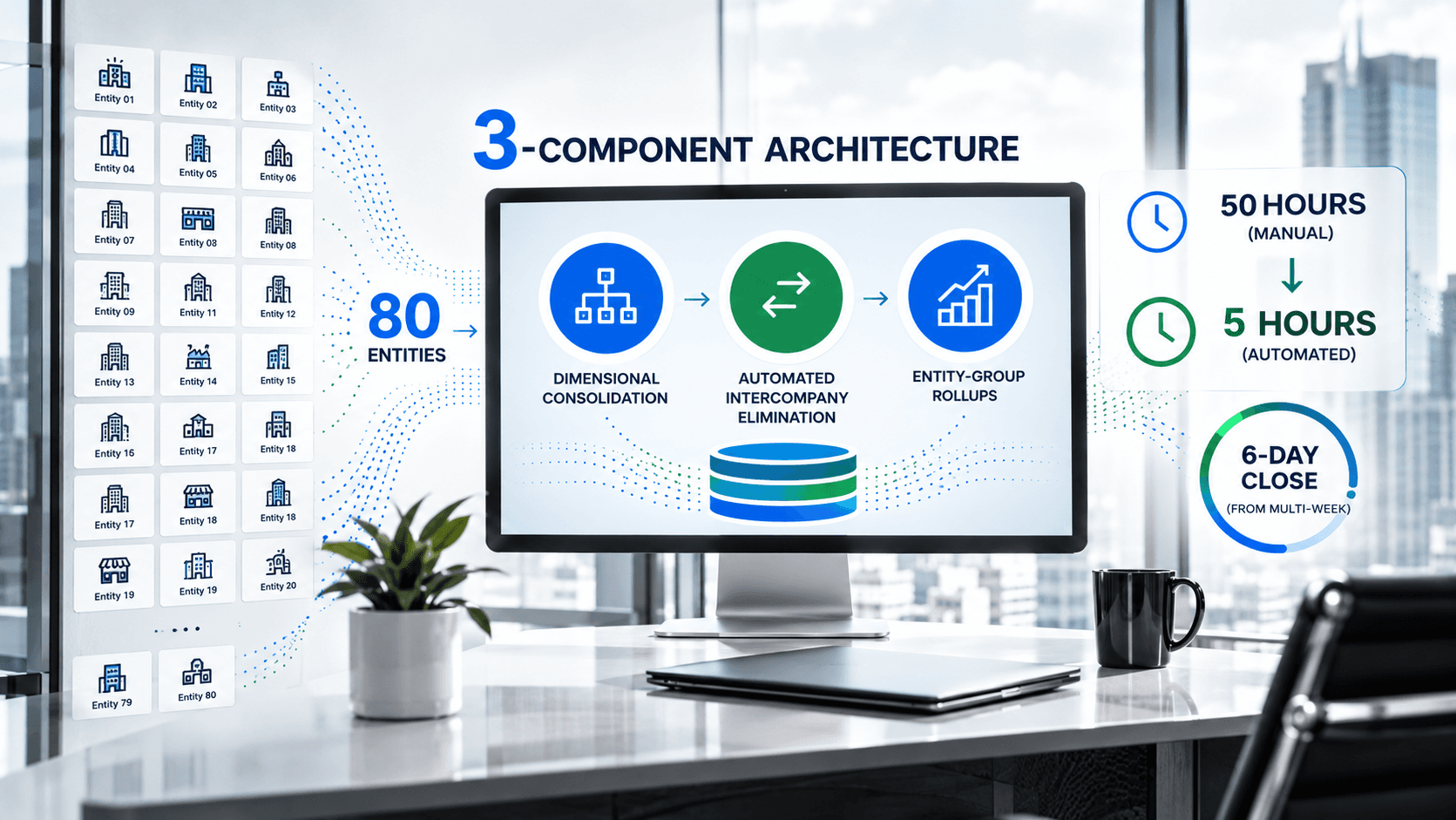
Place one — the close cycle conversation. A controller reports that the close takes twenty-one days. The CFO sympathizes, adds discipline initiatives, makes the team work harder. The close still takes twenty-one days because the architecture is the constraint. The CFO with an ERP point of view names the architectural issue, scopes the remediation, and the close moves to eight days in a quarter. The CFO without that point of view is sympathetic, expensive, and ineffective on the single most important operational lever the finance function has.
Place two — the reporting infrastructure conversation. The board asks for a profitability breakdown by product line. The controller produces it from an Excel rebuild. The CFO presents it. Three months later, the question changes — now the board wants it by customer segment. The Excel rebuild takes another two weeks. The CFO who understands the dimensional framework knows that this is happening because the GL was not dimensionalized correctly during implementation. The fix is architectural, not procedural. The CFO without that knowledge keeps approving Excel rebuilds.
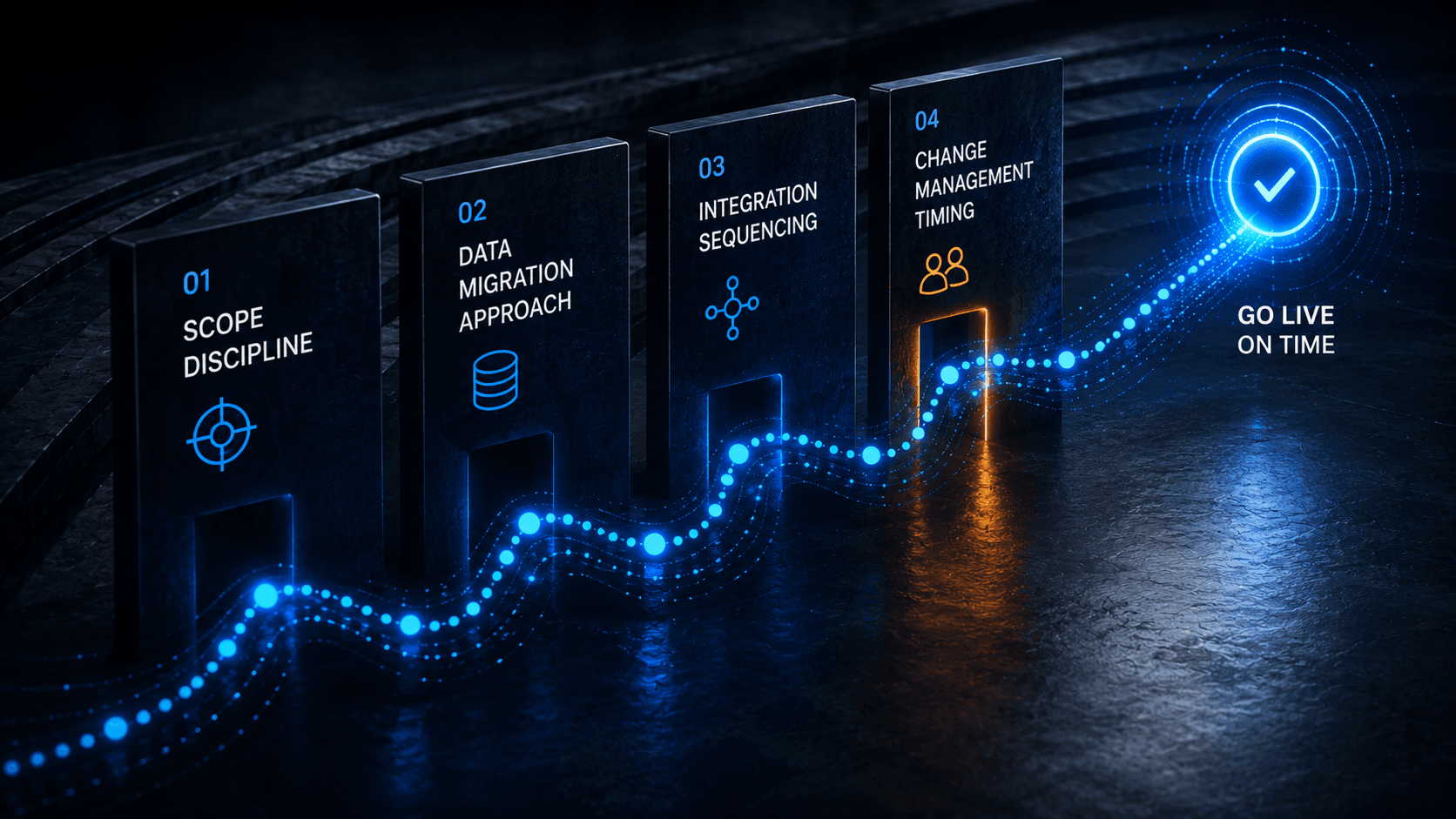
Place three — the vendor evaluation conversation. The business is considering an ERP upgrade or migration. The implementation partner pitches a six-month timeline. The fractional CFO without architectural fluency takes the pitch at face value. The CFO with the fluency knows that for a multi-entity business with project economics, the realistic timeline is closer to twelve months, the dimensional framework decision is more consequential than the platform choice, and the partner's proposed approach has three structural risks the controller has not flagged. The CFO with that knowledge negotiates differently and protects the business from a misscoped engagement.
The candidate pool for fractional CFOs who have both CFO judgment and ERP architectural literacy is small. The candidate pool for fractional CFOs who have personally led an ERP implementation, designed a dimensional framework across multiple entities, and made the close-cycle decisions that compressed twenty-one days to six is much smaller. The price difference between these candidates is real, and it usually pays for itself within a single engagement.
Across the businesses where I have served as fractional CFO — multi-entity real estate, multi-channel eCommerce, healthcare receivables, professional services — the highest-leverage decisions in each engagement were architectural, not analytical. The reporting work was the visible deliverable. The ERP architecture work was the underlying lever.
If your fractional CFO operates exclusively downstream of the ERP — consumes its outputs, builds reports against it, but cannot speak about its design — the engagement is producing half the value a fully-equipped CFO would deliver. The other half is sitting in architectural decisions nobody is qualified to make.
This is the structural arbitrage in the fractional CFO market right now. Most candidates do not have it. The few who do are not pricing for the gap — yet.