Part of: Why your month-end close keeps getting slower
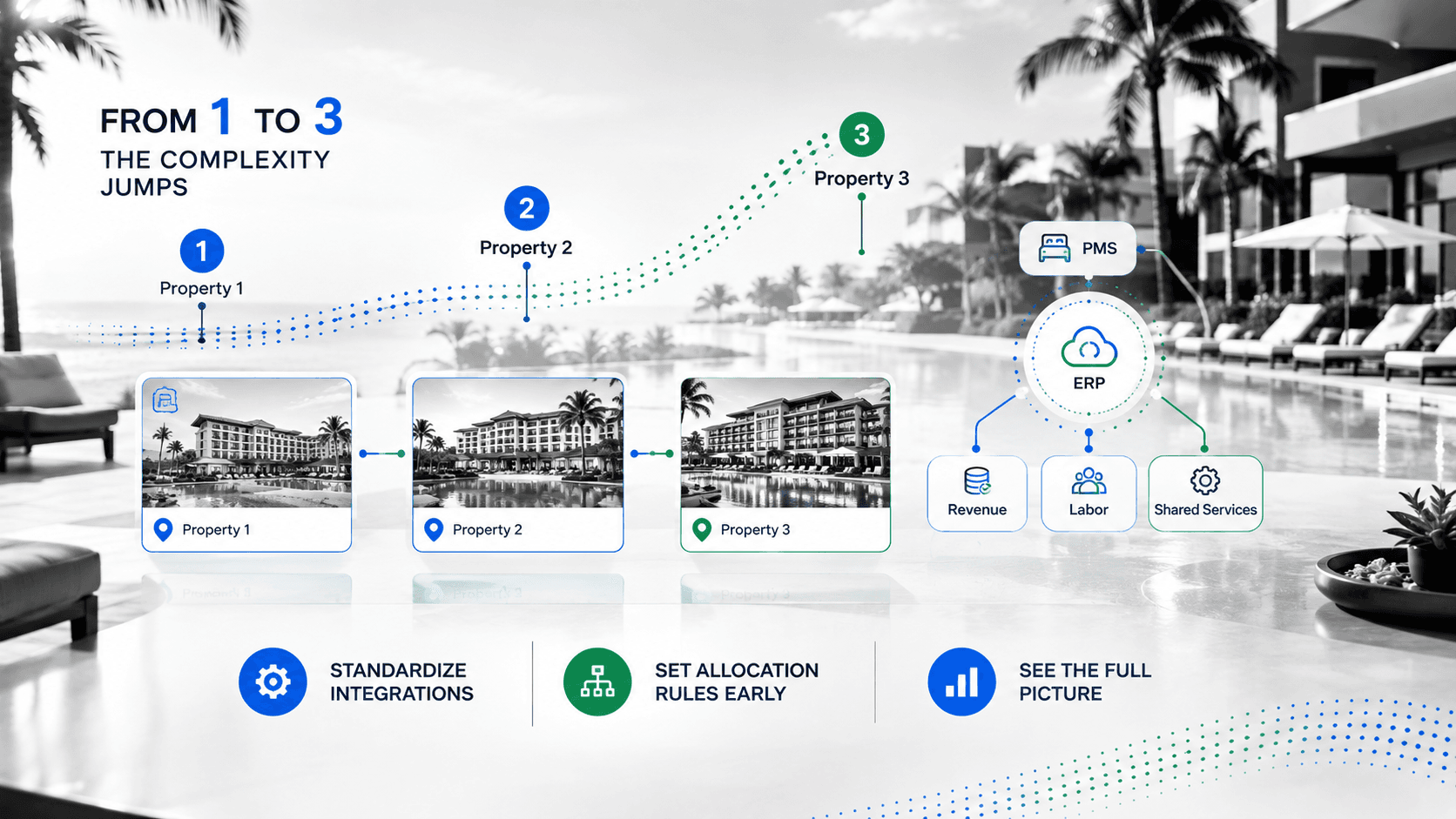
Eighty-entity consolidation sounds like a Big Four problem. It is not. Mid-market businesses hit this complexity through acquisition rollups, real estate property accumulation, and franchise expansion — and most of them handle it in architecture designed for ten entities.
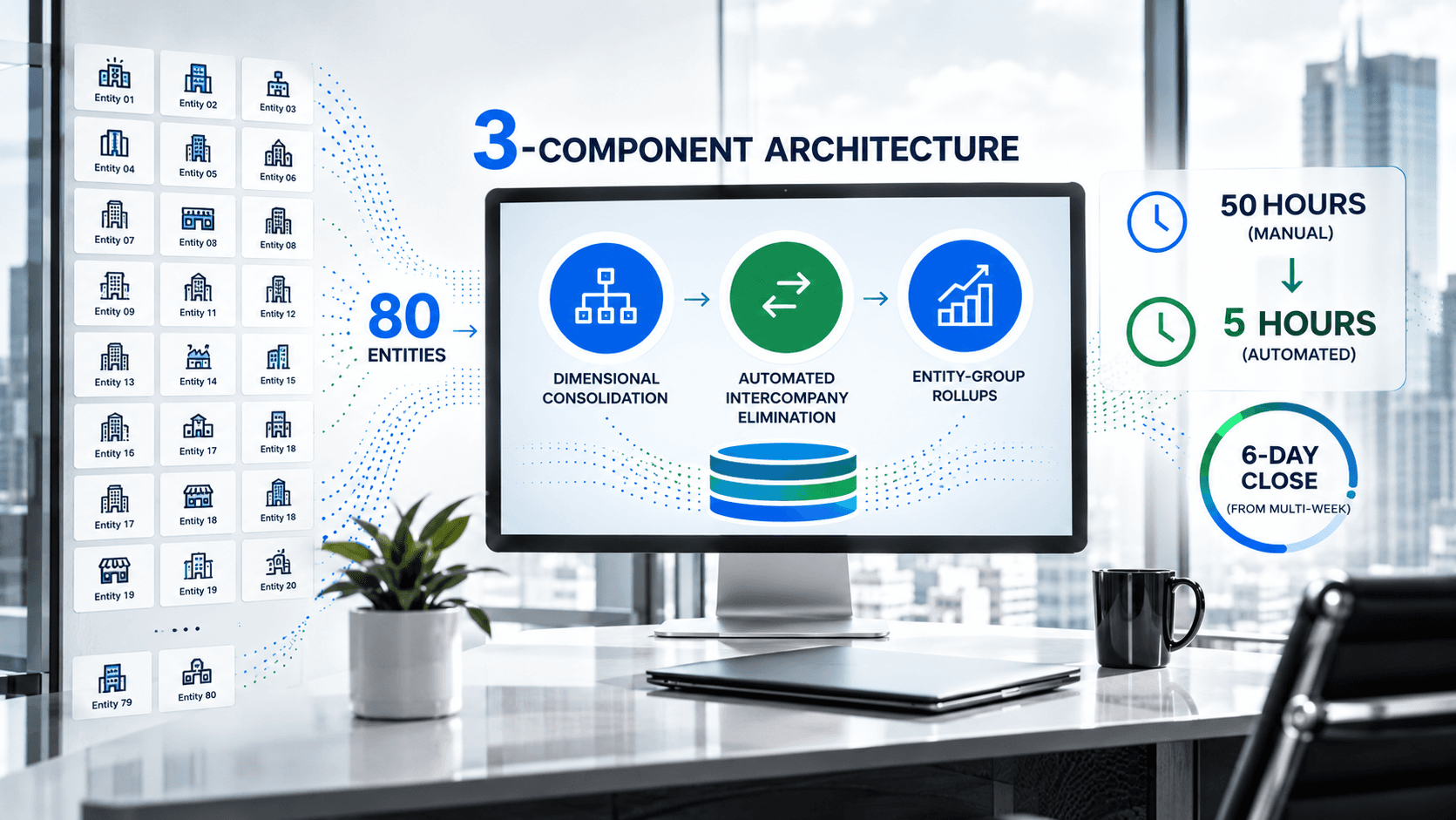
The architecture pattern that compresses fifty hours of monthly consolidation work to five is built on three components. None are exotic. All are commonly skipped during initial implementation because the team is sized for current entity count, not the count they will reach in three years.
Component one — dimensional consolidation, not workbook consolidation. Modern ERPs support native consolidation through a parent-entity construct. Each operating entity rolls up to a parent, the parent to a region or segment, the top level to the consolidated entity. The system runs elimination journal entries automatically based on configured rules.
The alternative — pulling trial balances from each entity into an Excel consolidation workbook — works at five entities, struggles at twenty, and becomes the bottleneck at fifty. By eighty entities, the workbook is the close. Every cycle is a multi-day rebuild of logic the ERP should be running natively.
Component two — automated intercompany elimination. Intercompany transactions must eliminate cleanly at consolidation. This requires standardized account mapping, mandatory dimension consistency across the inter-entity transaction pair, and weekly reconciliation cadence. Manual elimination at eighty entities is roughly twenty hours of work per month. Automated elimination with weekly cadence is roughly thirty minutes of exception review.
Component three — entity-group rollups for management reporting. Eighty entities at the consolidated level are unreadable. The architecture needs intermediate rollups by region, business segment, acquisition cohort, or property cluster — in the same system as the consolidation.
In a recent engagement across forty-four entities, this three-component architecture produced a six-day close from the same team that previously ran multi-week cycles.
Filed under