Part of: Why your month-end close keeps getting slower
Most multi-entity holding companies are paying multi-entity prices for what is structurally single-entity bookkeeping repeated fifteen times. Every new entity adds linear cost. The engagement scales with the wrong math.
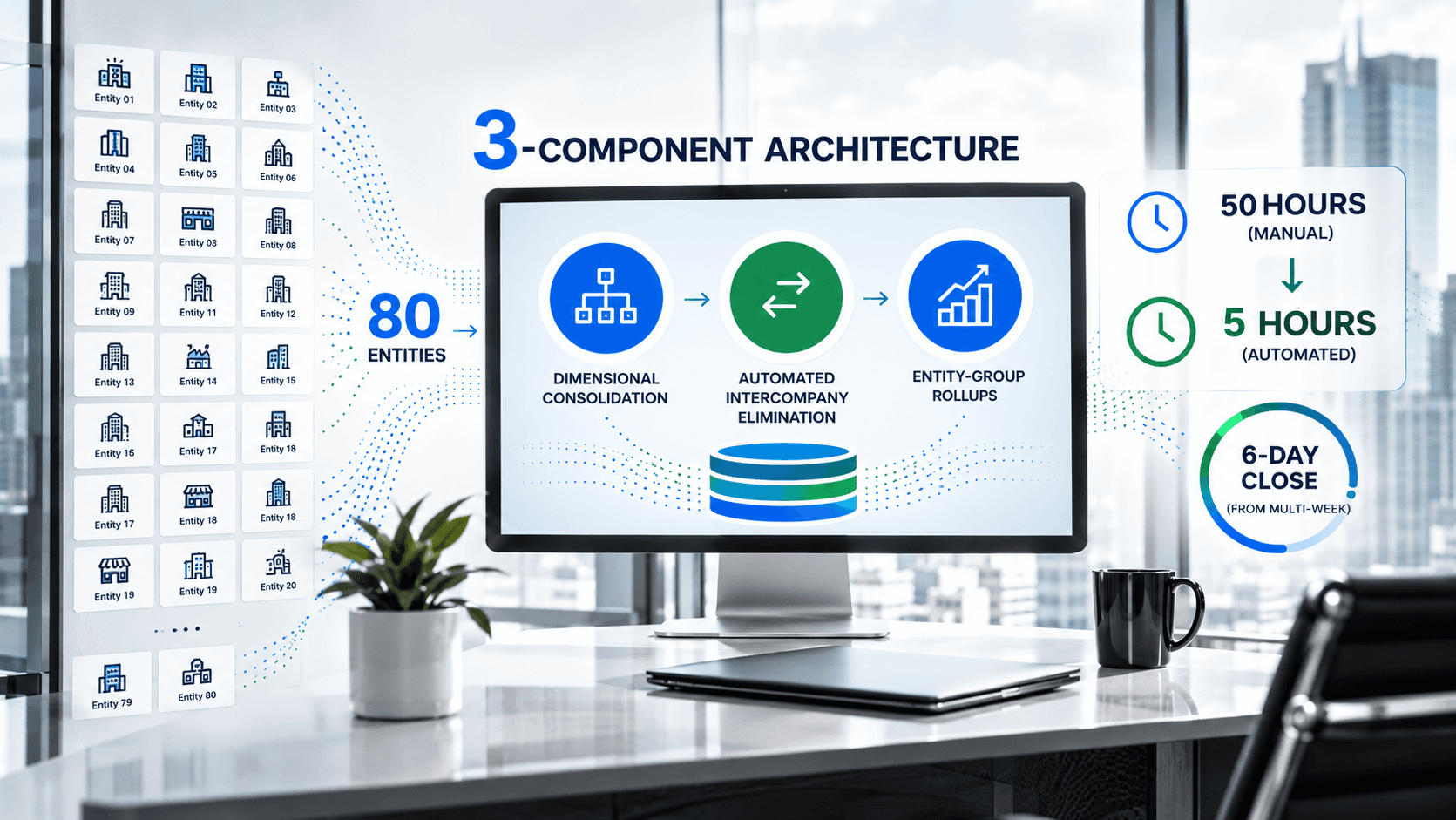
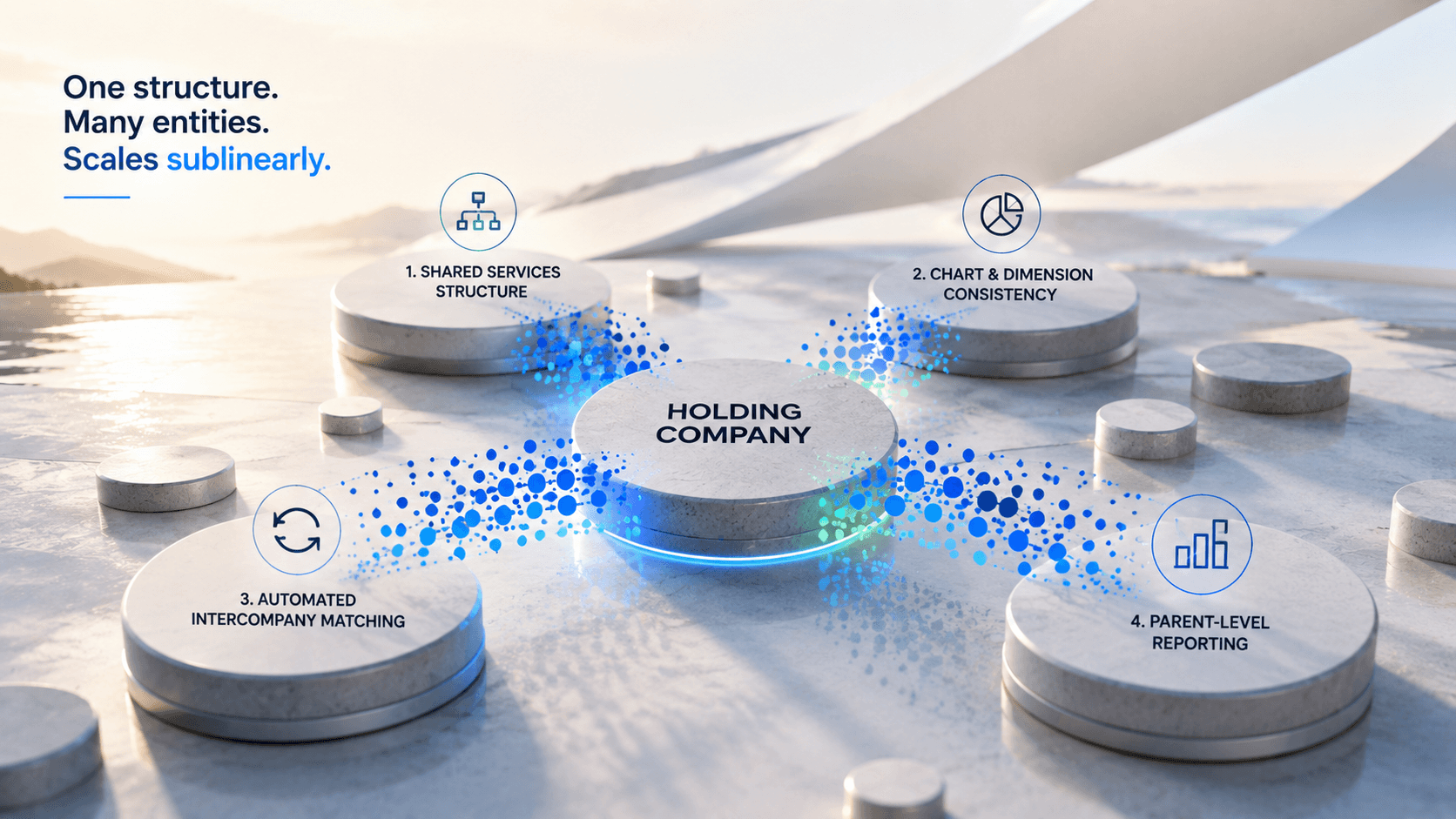
The architectural pattern that makes outsourced accounting scale across a holding company requires deliberate design at the front of the engagement, not retrofitted after the third entity has been onboarded with a different chart of accounts.
Component one — shared services structure for back-office costs. The parent entity carries shared services costs and allocates them to operating entities through a documented method. Without this, every operating entity pays for its own software and engagement hours, and nobody is consolidating the cost.
Component two — chart of accounts and dimension consistency across all entities. Every entity operates on the same chart of accounts. Every entity tags transactions with the same dimensions. Variations live in dimensions, not in chart structure. Without this, consolidated reporting requires Excel mapping every month.
Component three — automated intercompany matching. Intercompany transactions are tagged at the source with the counterparty entity. The system matches receivables to payables automatically. Mismatches surface in a weekly exception queue with a named owner.
Component four — parent-level reporting above entity-level detail. The CEO of a fifteen-entity holding company does not need each entity's income statement in the monthly review. They need the consolidated view, the by-segment view, the variance commentary against plan.
The pattern was consistent across the multi-entity engagements I have built — including a real estate holding company with seven entities, a multi-channel commerce operation with subsidiary structures, and a forty-four-entity organization spanning operating and holding tiers.
A holding company built on this architecture adds the next entity for two to four hundred dollars of incremental engagement cost. A holding company without it adds the next entity for eight to twelve hundred dollars.
Filed under