Part of: Why your month-end close keeps getting slower
ERP implementations slip on schedule for reasons that look operational — the team was overworked, testing took longer than expected, a critical integration broke at the worst time. The actual causes are almost always architectural, made in the first sixty days, and invisible until they manifest five months in.
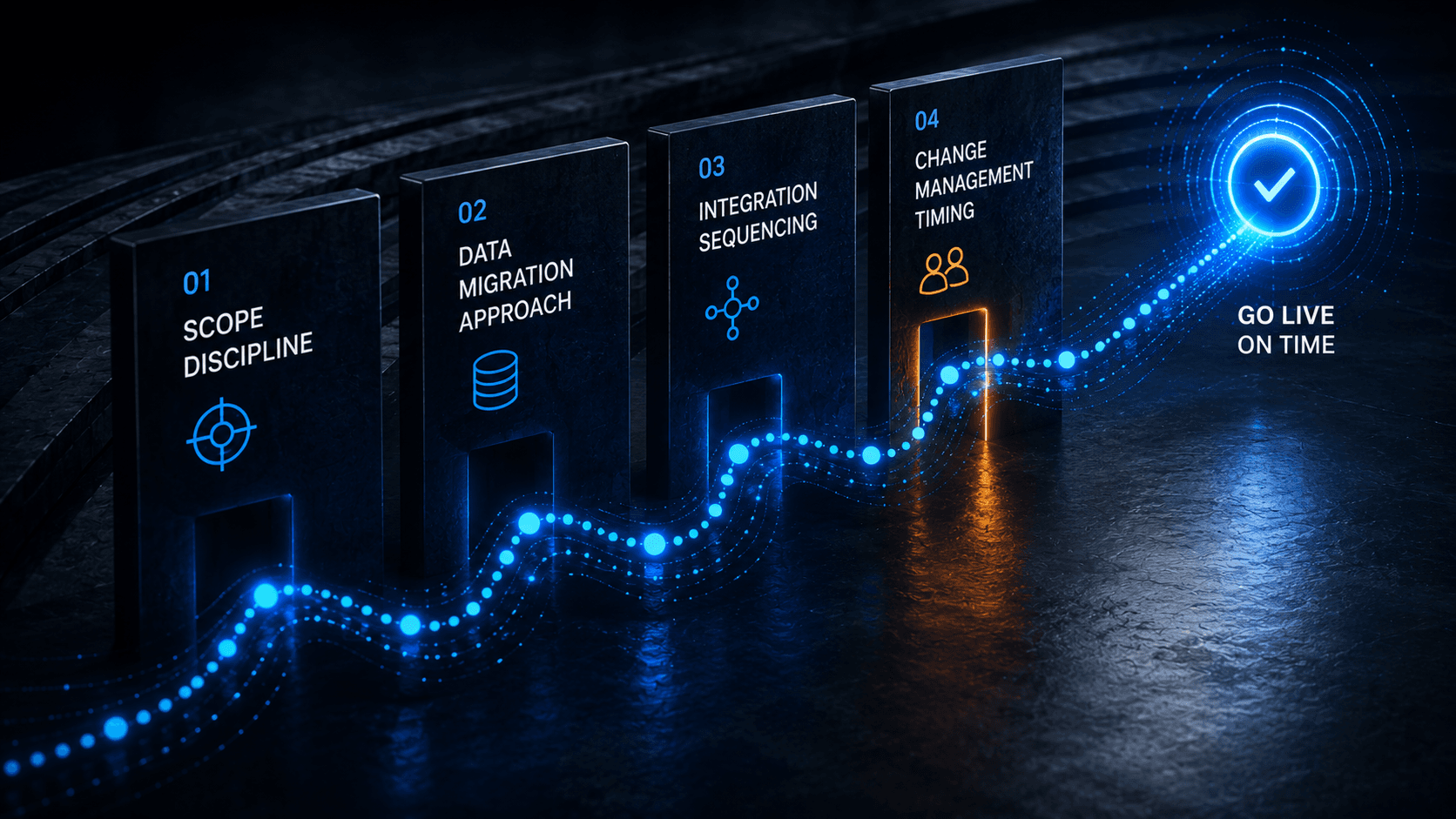
Decision one — scope discipline. The original scope says configure five modules. By month three, finance has added two, operations wants a third, IT is expanding the integration list. Without a structured change request process and a project sponsor empowered to say no, scope grows twenty to forty percent. The schedule does not grow proportionally. The slip is mathematically inevitable.
Decision two — data migration design. Most implementations treat data migration as a late-project activity. It is the highest-risk activity in the project. The data model in the new system differs from the legacy system. Mapping that difference at month five, under pressure to go live, is where most implementations break. The fix is a migration plan documented in weeks two through four, with test migrations run continuously.
Decision three — integration architecture before configuration starts. Integrations between the ERP and payroll, CRM, eCommerce platforms, and banking require technical decisions about data ownership, update frequency, and conflict resolution. These decisions affect configuration choices made weeks earlier. Integrations designed after configuration is complete create rework.
Decision four — user acceptance testing scope. UAT planned as a two-week sprint at the end of a six-month project is not UAT — it is a compressed crisis. The fix is rolling UAT throughout the build, with business users testing completed modules as they finish rather than testing everything at once at the end.
Four decisions. All available in the first thirty days. All commonly deferred.
Filed under