Part of: AI-native finance operations: what it actually means
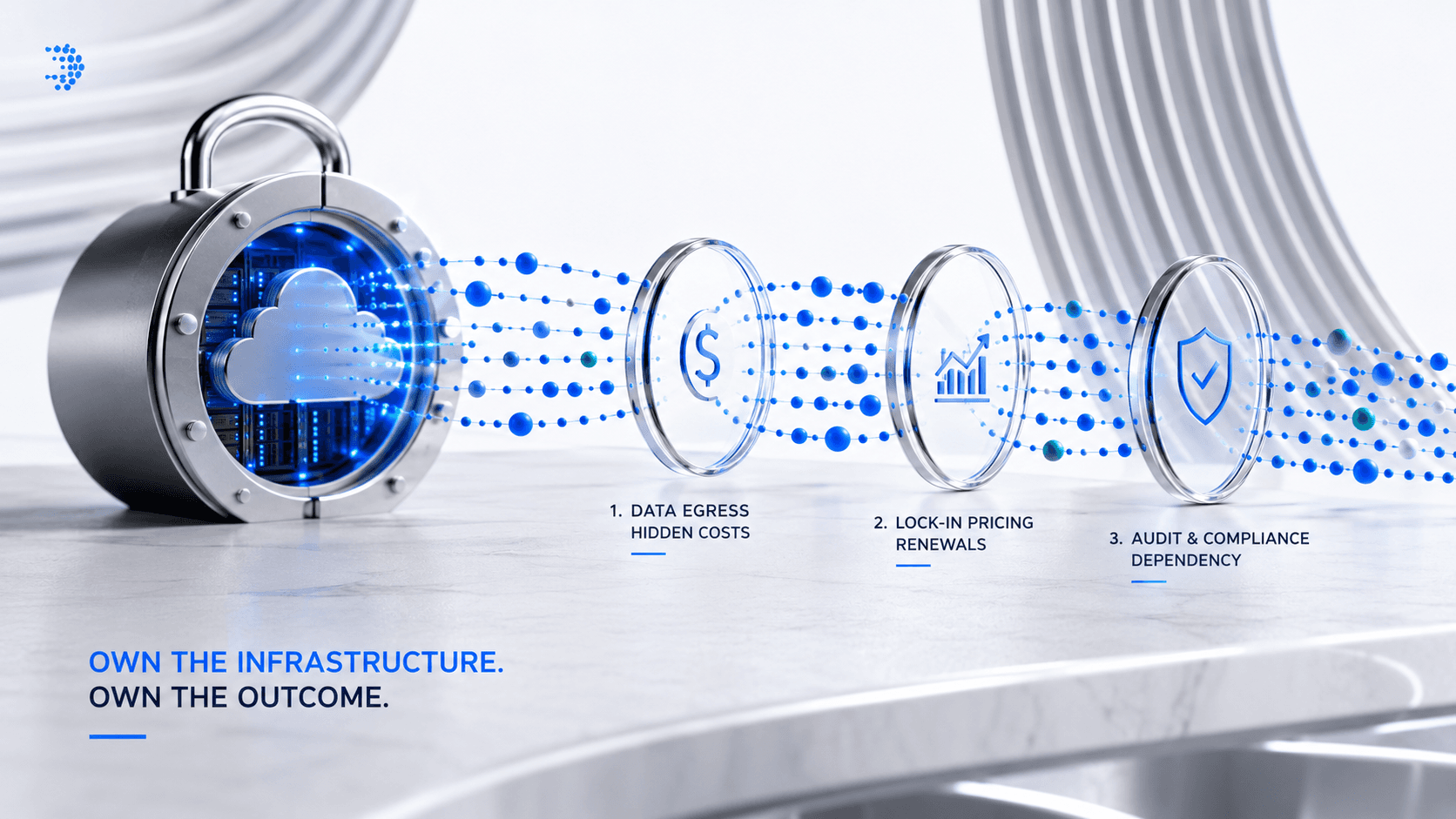
When an AI vendor proposes hosting the deployment on their platform, the cost of the engagement is not the price they quoted. It is the price they quoted plus three hidden cost layers that surface at year two.
Layer one — data egress. Your customer data, transaction data, and operational data now live on the vendor's infrastructure. Pulling it back out — for an audit, a migration, or simply for analytics in your own warehouse — costs money you did not budget. The contracts I have read in the last twelve months include egress fees ranging from $0.05 per GB to "subject to negotiation," which is the vendor's polite way of saying expensive.
Layer two — lock-in pricing renewals. The pricing in year one is rarely what year three looks like. Once your payables automation, receivables posting logic, and audit logs live inside the vendor's environment, the renewal conversation is a negotiation you have already lost. The cost of switching includes rebuilding the integration, retraining the models, and re-validating against your operational requirements — and the vendor knows it.
Layer three — audit and compliance dependency. The auditor will ask for evidence of access controls, change management, and data governance. If those controls live in the vendor's platform, your audit's response includes the vendor's SOC report. Your audit timeline now includes their renewal cycle. Their incident is your finding.
In every production AI engagement I have led — including one involving roughly 465,000 transactions flowing between a practice management platform and Sage Intacct, hosted in the client's own AWS RDS environment — the build was on the client's infrastructure. The vendor's models, the client's compute. The vendor's API, the client's audit logs. The vendor's expertise, the client's source code.
The trade-off is real. Hosting on your own infrastructure costs more upfront, requires your team to operate it, and slows the initial deployment by thirty to sixty days. But the asset you end up owning at the end of year one is yours. The asset you end up renting at the end of year one belongs to whoever renews you.
The dividing line is structural. If the AI deployment is core to how the business operates, it lives on the business's infrastructure. If it is a feature, it can live on theirs. Most AI strategies are confusing those two categories — and the conversation that uncovers the difference rarely happens before the contract is signed.
Filed under