Part of: AI-native finance operations: what it actually means
"AI-powered close" is the most over-pitched and under-specified product category in finance technology right now. In production, AI moves the close needle dramatically in three specific areas and produces almost no return in three others. The teams that conflate these waste money and miss the actual leverage.
Where AI compounds value.
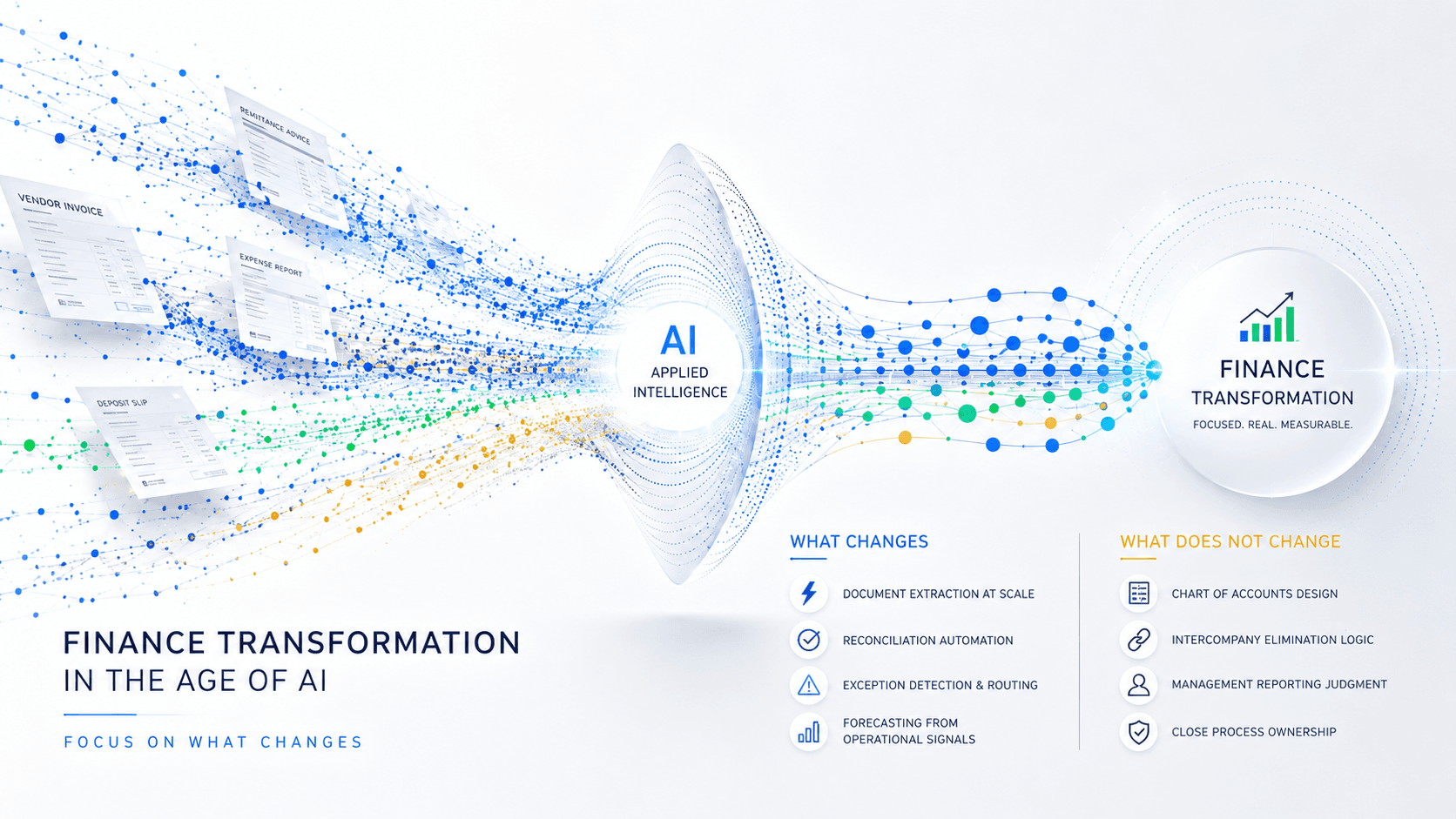
Reconciliation across high-volume transactional sources. Bank reconciliation, credit card matching, marketplace settlement reconciliation, intercompany matching. Across the engagements I have led, AI-driven reconciliation routinely converts a five-day reconciliation phase to a six-hour one. The team reviews exceptions; the system handles the match.
Document extraction at the source. Vendor bills, payer remittance, expense reports, deposit slips. AI-powered extraction with confidence scoring and exception routing eliminates what used to be the slowest step of the pre-close cycle.
Exception detection and anomaly flagging. AI models trained on transaction history surface outliers — duplicates, miscodings, approval bypasses — that rule-based systems miss. The close team spends time on real exceptions, not routine items.
Where AI produces little return.
Journal entry production for complex accruals. Complex accruals require contract terms, operational decisions, accounting judgment. AI does not have this context. The controller still needs to produce the entry.
Variance commentary. AI can identify that revenue missed plan by $300K. Understanding why — a delayed deal, a pricing change, an inventory constraint — requires business knowledge the model does not have.
Audit-trail completeness. AI outputs require human sign-off in audit-grade close processes. The time saved on the close is partially offset by the time required to document AI output sufficiently for the auditor.
The AI close is real. The all-AI close is marketing.
Filed under