Part of: Why your month-end close keeps getting slower
The call I get most often from real estate operators is some version of: "My lender wants consolidated financial statements and I need them in ten days."
The operator thinks this is a reporting problem. It is almost never a reporting problem. It is an architecture problem that has been deferred until it became urgent.
Consolidated financial statements for a real estate portfolio — the kind a lender or commercial bank expects — require five things to exist before the report can be generated.
One: a common chart of accounts across all entities. If each property is on a slightly different account structure, the consolidation requires manual remapping. Every time.
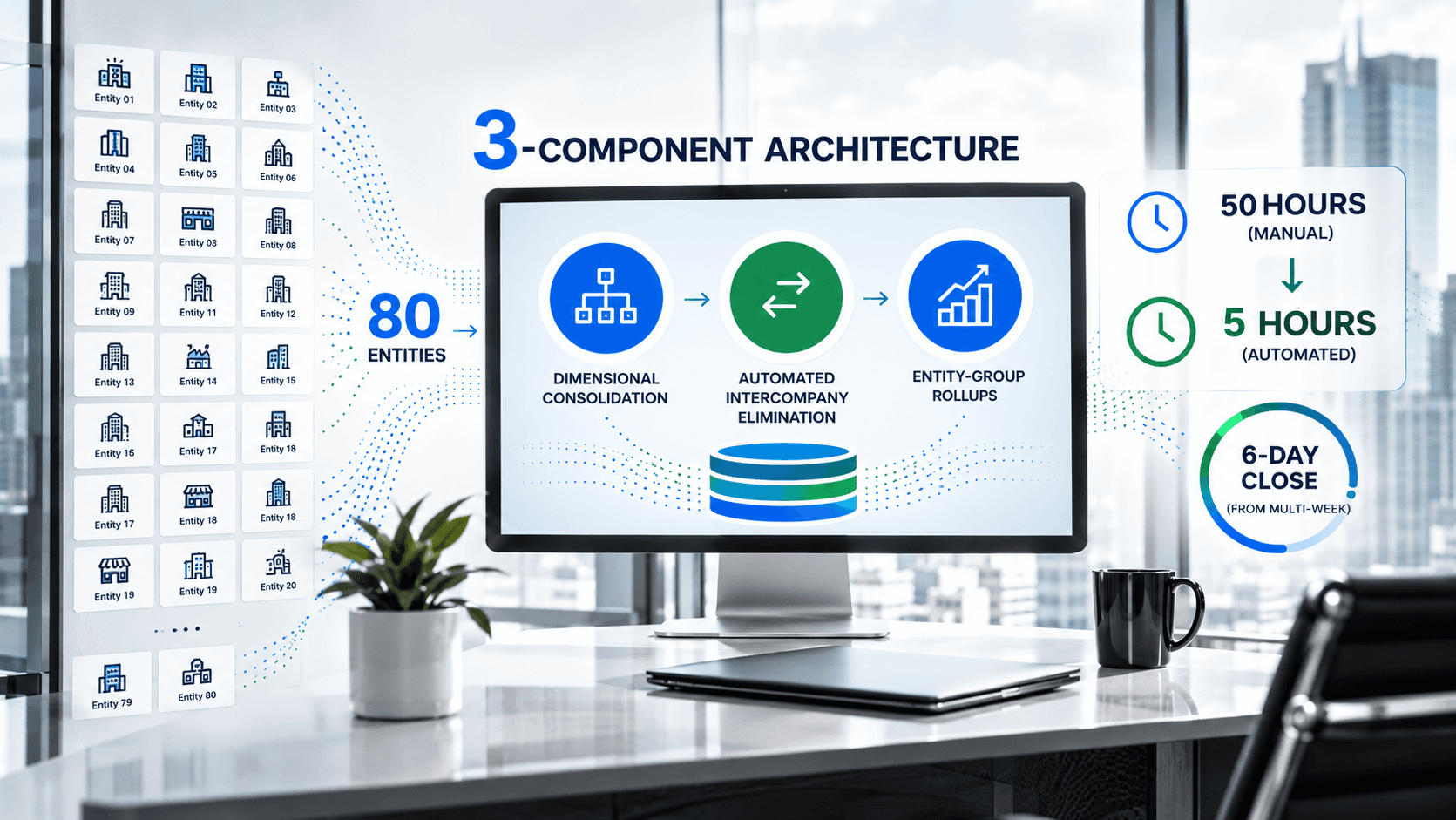
Two: intercompany eliminations already booked. The management fee from the property entity to the management company entity, the reimbursed expenses, the intercompany loans — these have to be eliminated before the consolidated view is a GAAP-compliant statement rather than a simple sum of trial balances.
Three: a consolidated debt schedule. Property-level debt, carrying amount, maturity dates, covenants. This does not live in most ERPs by default. It has to be built.
Four: entity ownership structure documentation. Which entities are wholly owned, which have minority interests, which are JV structures where equity method accounting applies rather than full consolidation.
Five: twelve months of comparative data at the consolidated level, not reconstructed from entity-level reports.
Most real estate operators can produce the data for all five of these. What they cannot do in ten days is restructure their accounting architecture to produce a report that requires all five to be pre-wired.
The operators who can hand a lender consolidated statements in forty-eight hours built the architecture when the fourth property closed, not when the lender asked.
Filed under