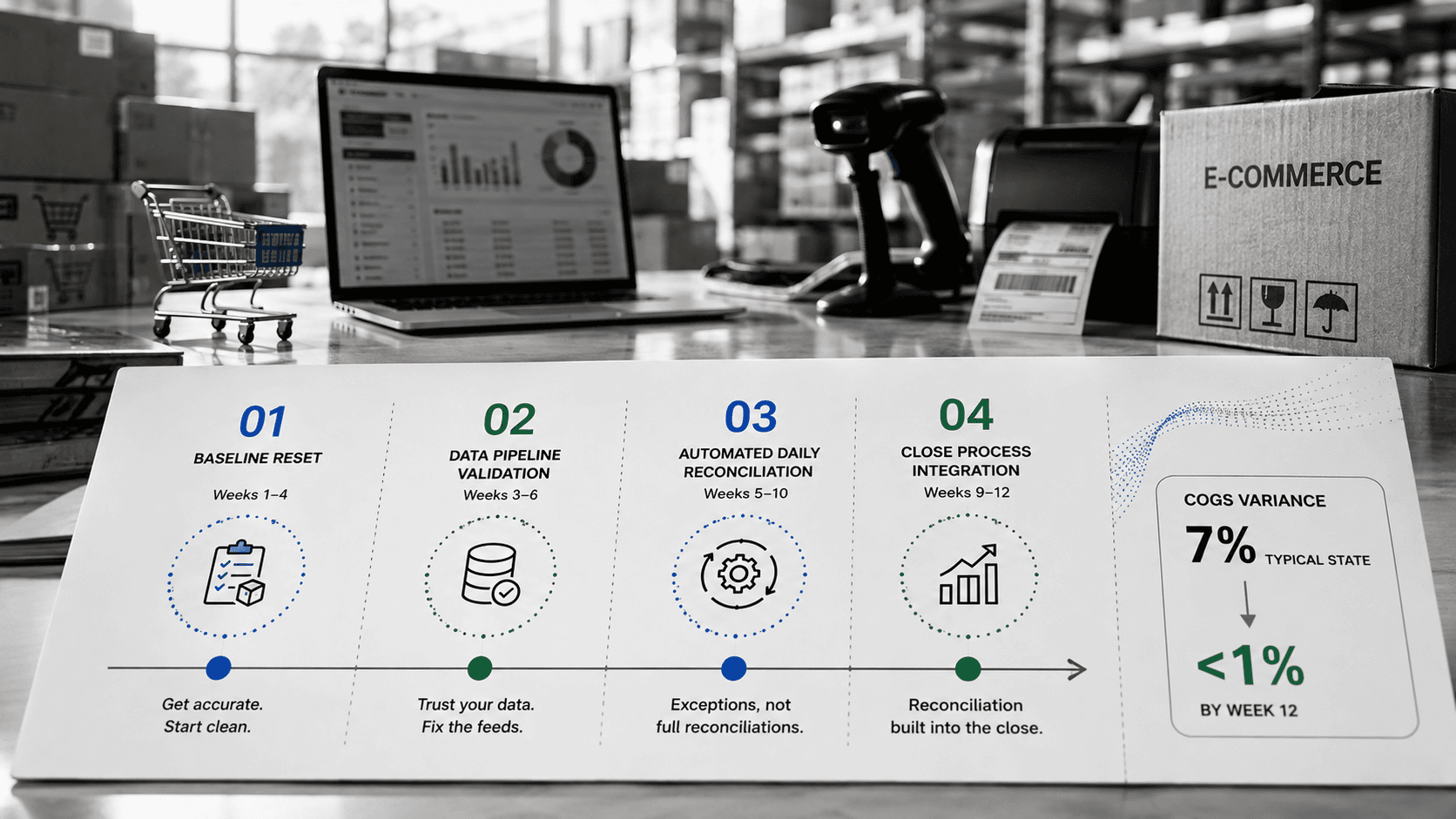
Most eCommerce businesses close in fourteen to twenty days. The CFO blames volume. The controller blames the team. The real cause is almost always architectural — and the fix is not "hire more accountants" or "buy a faster ERP." It is unwinding four specific bottlenecks that drive the cycle.
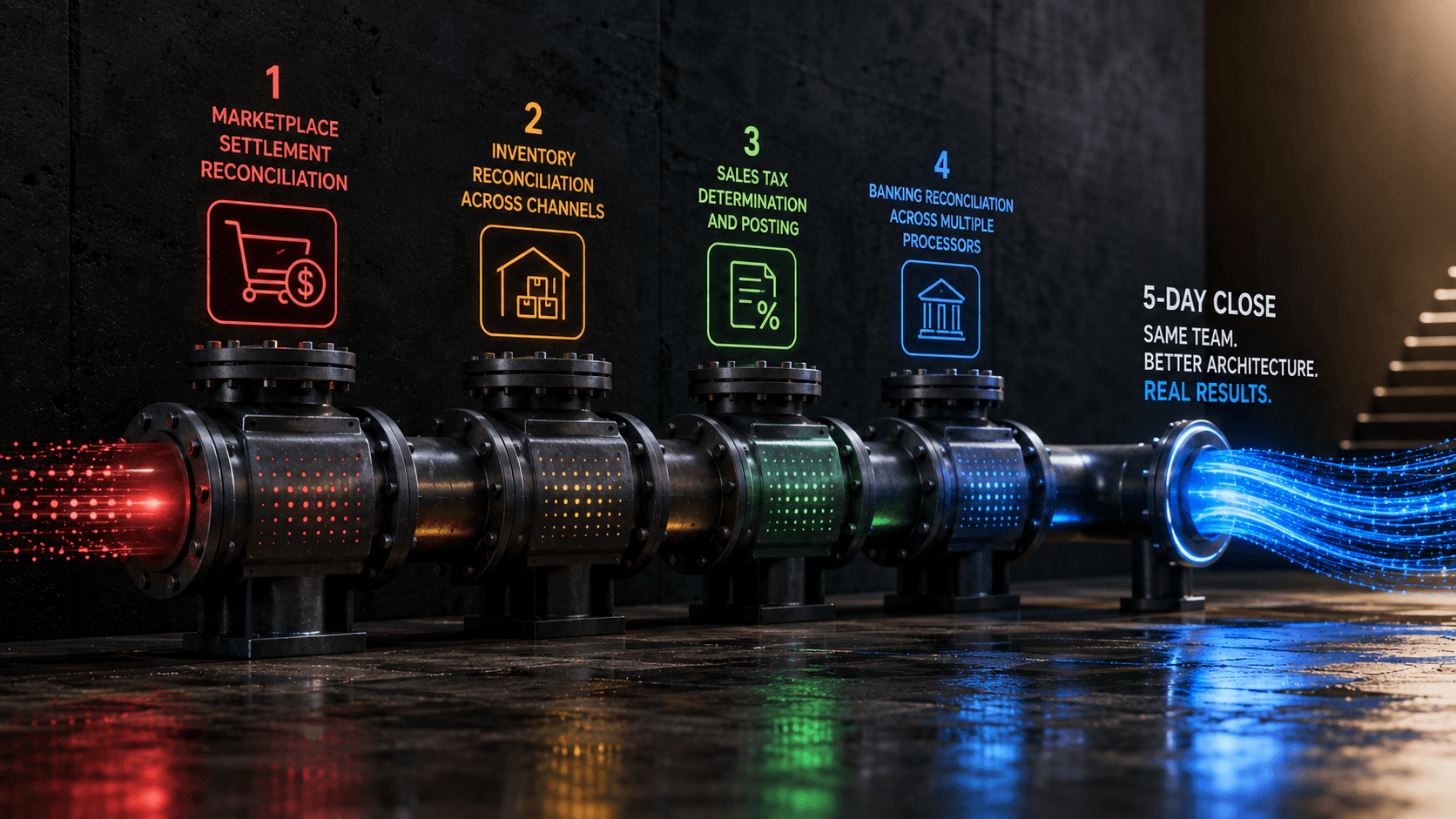
Bottleneck one: marketplace settlement reconciliation. Amazon, eBay, Walmart each send bundled settlement deposits that require unwinding to post correctly. Without a clearing-account architecture, the team rebuilds the settlement breakdown in Excel each month — typically three to five days of work for a multi-channel operation. The fix is clearing accounts configured per marketplace, with API-driven reconciliation against the clearing balance.
Bottleneck two: inventory reconciliation across channels. Inventory sits in the owned warehouse, in FBA, in third-party logistics, in returns processing. Each location reports independently with its own timing. Without a unified inventory feed reconciling daily against the ERP perpetual inventory, the close cannot start until inventory is manually reconciled. This typically costs three to five additional days.
Bottleneck three: intercompany transactions across marketplace entities. Multi-channel businesses often operate different entities per platform or region. Intercompany transactions between entities need the same clearing-account and weekly reconciliation discipline that any multi-entity close requires.
Bottleneck four: revenue recognition timing. When does revenue recognize on a marketplace sale — at order, at shipment, at delivery? If the team does not have a documented, consistently applied policy, the monthly revenue number requires manual review every cycle.
Addressing all four bottlenecks at the same headcount produces a five-day close. The team's time shifts from reconciliation to analysis.
Your systems are leaking time and trust somewhere. The Fragmentation Scorecard shows you where in 8 questions.
→ Score my systems | bestpracticify.co/scorecard