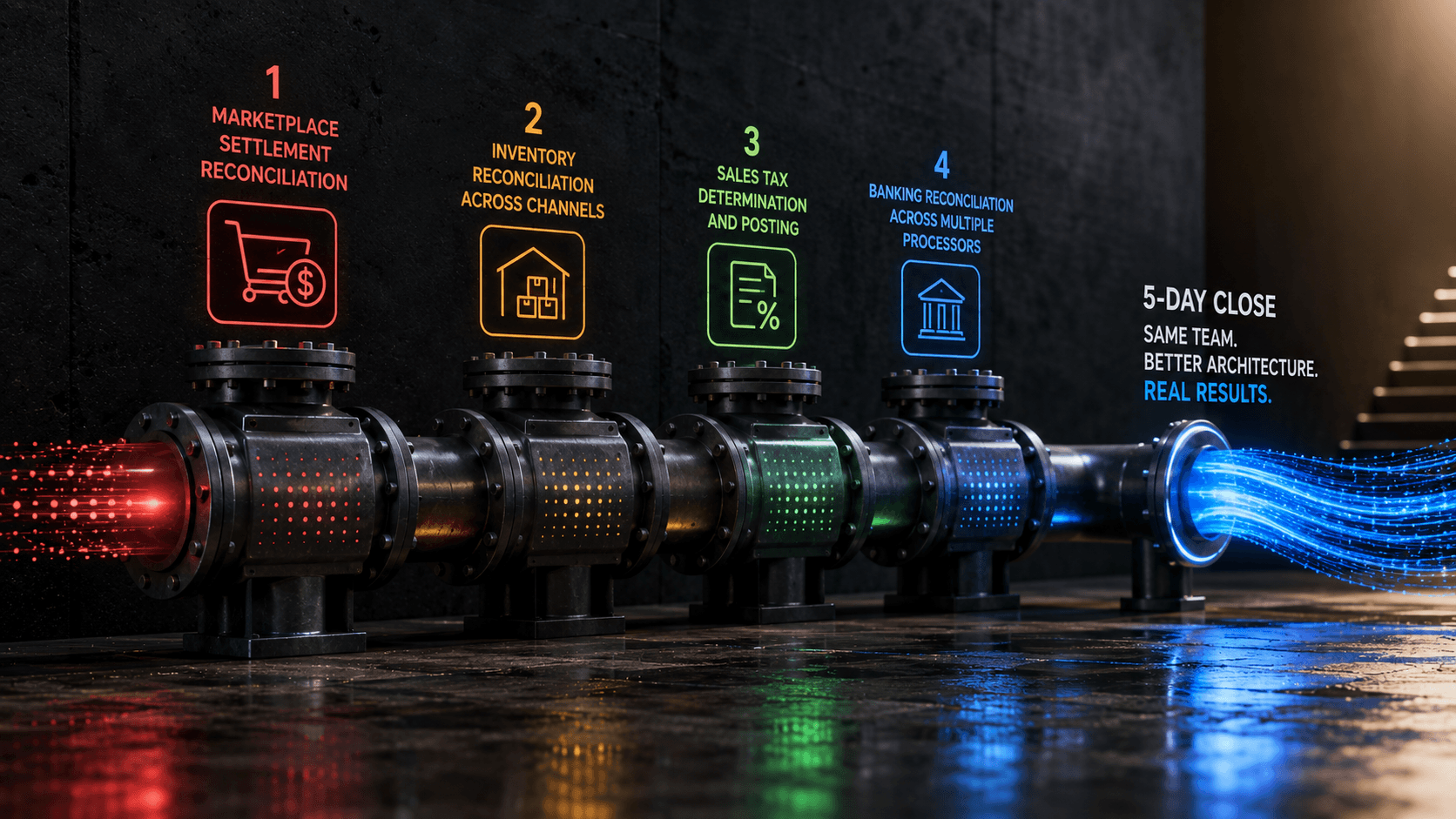
Most multi-channel inventory reconciliation breaks because it is manual. The team pulls Amazon FBA reports, Walmart inventory positions, Shopify storefront inventory, and warehouse counts into a spreadsheet. The spreadsheet reconciles them against the ERP perpetual inventory. The variance is investigated, adjustments are posted, the system moves on. The work runs five to ten hours every month and breaks down whenever the team is overloaded — which is usually during the close.
The system that holds at scale is four components, built deliberately at architectural design phase.
Component one — unified SKU taxonomy across channels. Every channel uses its own SKU conventions. Amazon ASINs, eBay item numbers, Walmart item IDs, Shopify variant IDs. Without a unified internal SKU that maps to each channel's identifier, reconciliation is a manual matching exercise every month.
Component two — daily automated inventory position pulls from every source. Every storage location — owned warehouse, Amazon FBA, Walmart fulfillment, third-party logistics, returns processing — sends its inventory position to the ERP daily. Not monthly. Daily. The daily cadence means the monthly close starts with a reconciled position rather than a reconciliation project.
Component three — automated variance flagging above threshold. The system compares the pulled inventory position against the ERP perpetual inventory daily. Variances above a configurable threshold generate an exception for named review. Below-threshold variances are logged and batched weekly.
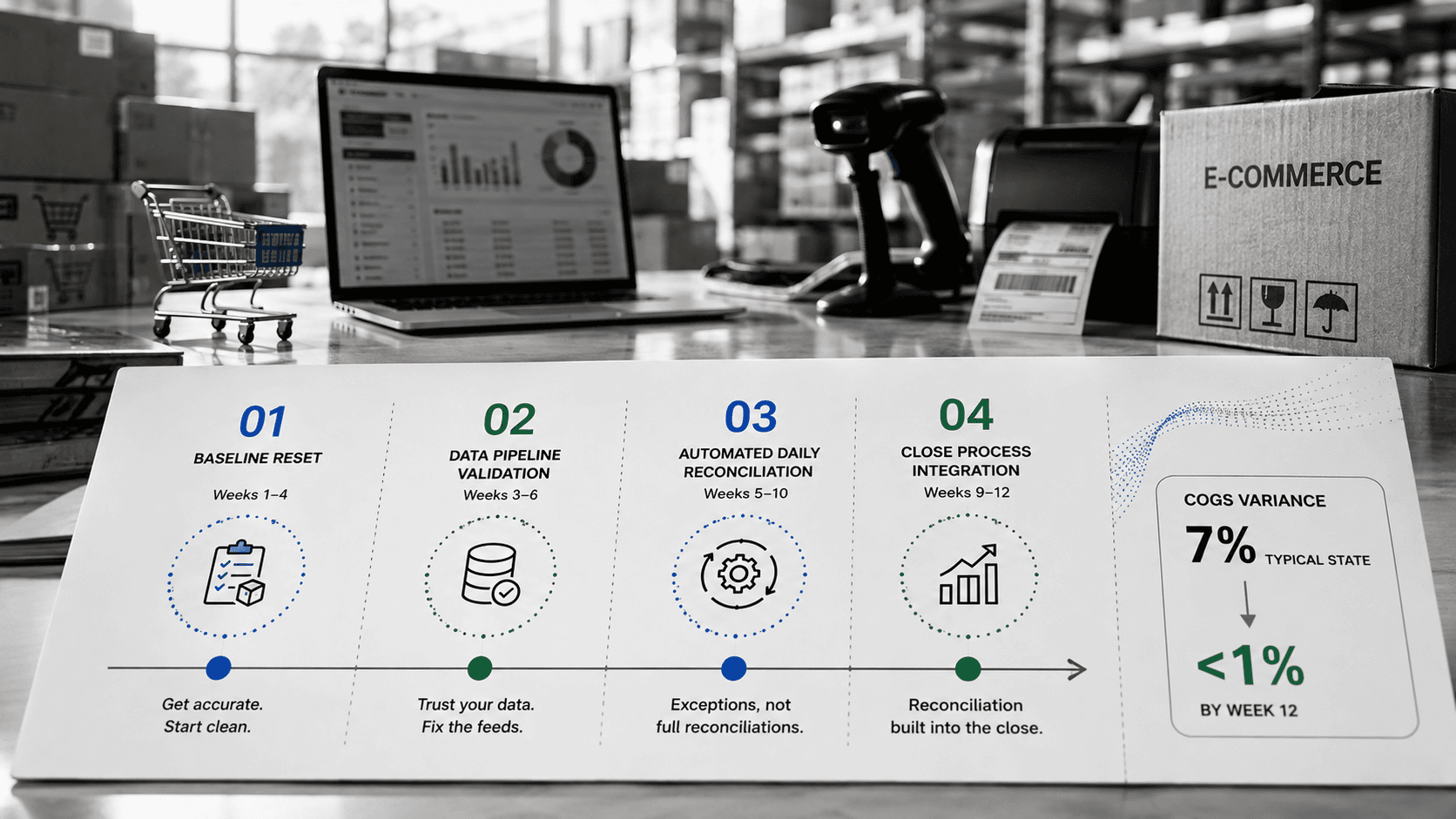
Component four — COGS feed from the reconciled inventory position. COGS posts against reconciled inventory movement, not against estimated or standard cost. This is the change that takes the seven percent COGS variance to under one percent.
Six to ten weeks to build. Five hours per month to run once in place.