Part of: Why your month-end close keeps getting slower
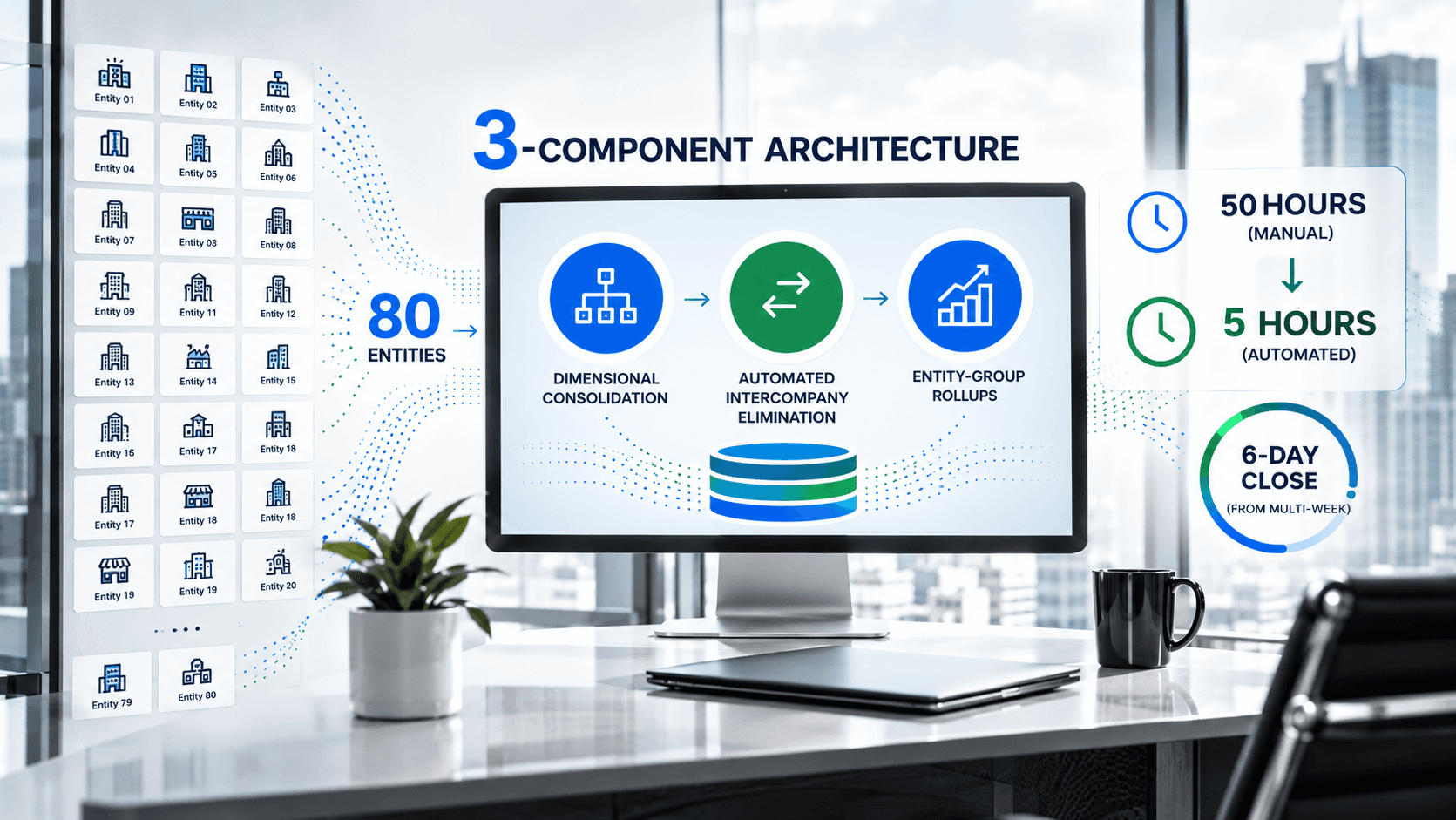
Real estate portfolios accumulate entities faster than almost any other business type. A property management company adds an entity per acquisition. A development group adds an entity per project. A fund adds entities at the holding structure, the operating level, and the special-purpose vehicles between them. By the time the operator is five years in, the entity count is forty and the accounting team is consolidating thirty entities in a workbook that was built when there were eight.
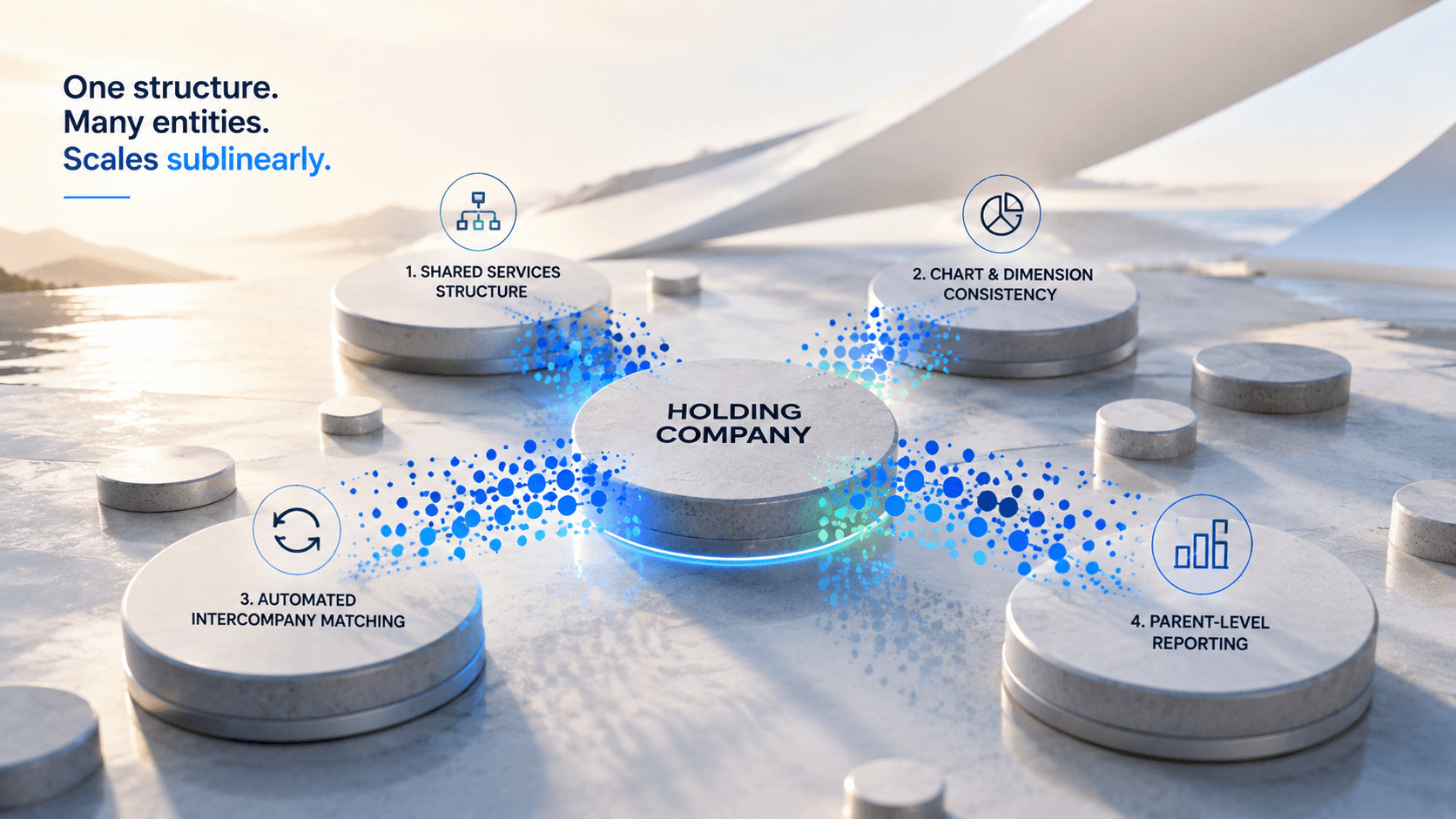
The consolidation architecture that works for real estate has three requirements that are different from other multi-entity structures.
First — entity grouping by economic purpose. Properties are not all equivalent for reporting. The operator needs operating properties separate from development projects, stabilized assets separate from lease-up, own-operated separate from third-party-managed. The ERP dimension structure has to encode this grouping from the beginning, not as an afterthought. Every entity needs a "property type" dimension tag at creation. Without it, the consolidated view shows everything flat — or requires a manual rebuild.
Second — the debt-service overlay. Real estate financial reporting without debt service is incomplete. Lenders want debt service coverage ratio by property. Investors want leveraged versus unleveraged return. The ERP structure needs to capture debt service at the property level, not the consolidated level, so DSCR can be produced for any property on demand without manual assembly.
Third — the investor reporting layer. If the portfolio has any outside capital — even passive equity partners in a single property — the reporting requirements differ from pure owner-operator. Investor reports need allocation tables, preferred return calculations, and contribution basis tracking. These should run from the ERP, not from separate partnership accounting workbooks.
The ten-week project that wires all three of these into a Sage Intacct implementation is available to any real estate operator running five or more entities. The operator who does it early has a lender-ready, investor-ready consolidation architecture that scales with the portfolio.
Running 20-plus entities across spreadsheets and QuickBooks? See what the fragmentation tax is costing you.
→ Score my systems | bestpracticify.co/scorecard